


Opticon London 2026: Growth, Agents and the Courage to Be Human


Opticon London took over the Barbican on Tuesday 13 October. This year the theme was "Camp Opticon", complete with trails, tents and outposts and a rebrand that Optimizely's CEO, Alex Aztberger, happily admitted some people hate. The day before, partners, customers and Optimizely's OMVP community gathered for a closed-session Community Day. Across both days, one message stood out, and it wasn't the one you might expect from an AI platform company. The case for AI is not efficiency. It's growth, and growth comes from people.
Growth, not headcount
CEO Alex Atzberger opened with the line of the day: "Cutting headcount is not a growth strategy. Unlocking talent is." He said it twice. His argument was that you can only cut 100%, but the upside has no ceiling. AI should clear the path so people can do the creative work they joined the profession for.
He framed every AI use case in marketing around three experiences:
- Marketer experience: how your team works. That means getting below the waterline of the iceberg, to the compliance reviews, translations and "work about work" nobody has time for.
- Customer experience: where the money is. Experimentation as a culture, personalisation on real-time signals and content at scale.
- Agent experience: the new one. AI agents already research and pre-filter brands before a human shows up, and now with WebMCP they can fill in forms and buy.
The point that matters most for leaders is that individual AI productivity is nice, but the real gains come from changing how the whole organisation operates. In Alex’s words, it's a transformation topic, not a technology one.
One platform, three trails
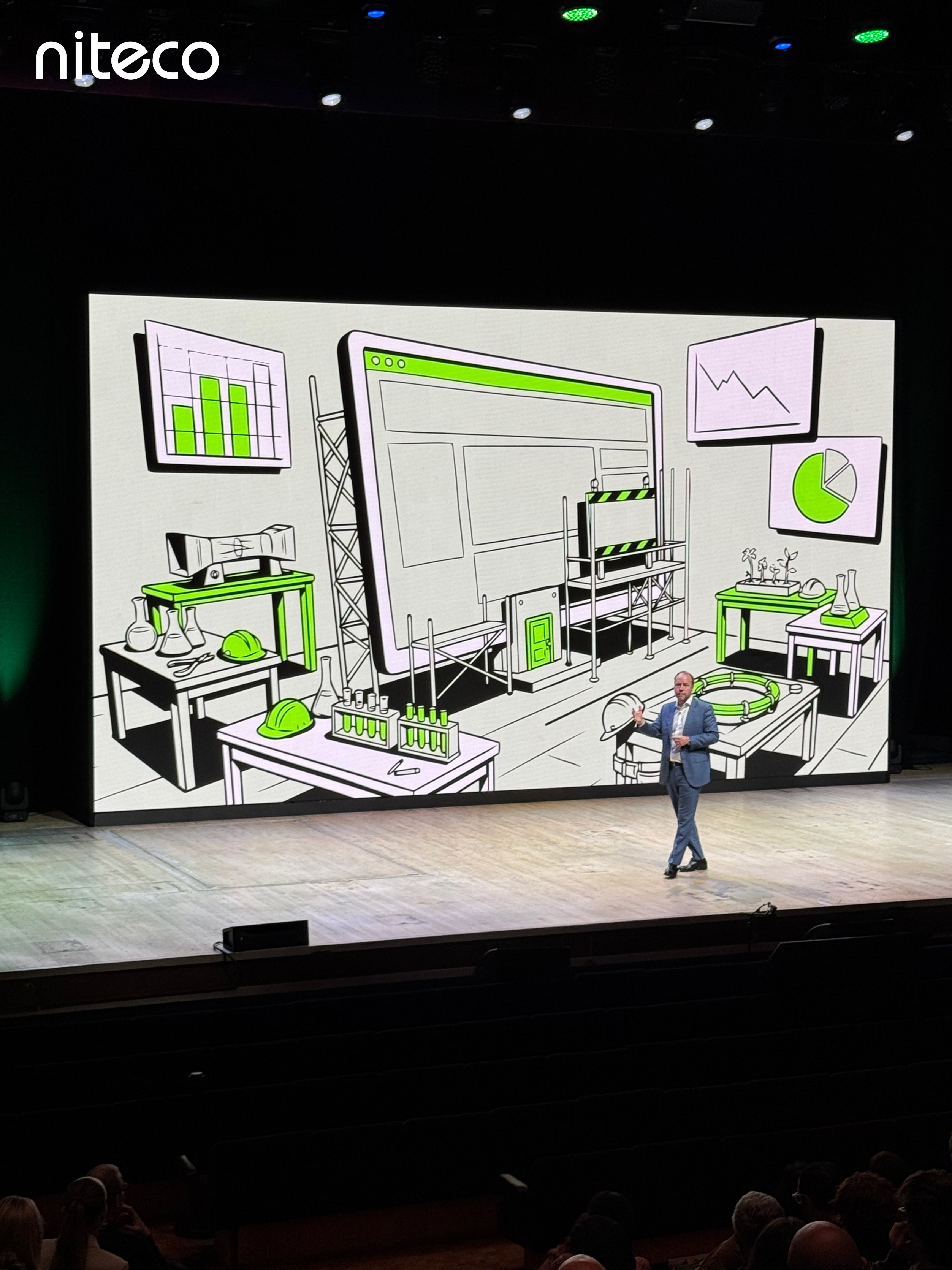
President Shafqat Islam and SVP Product Kevin Li ran the product keynote. Opal is now Mark (I'm still struggling to come to terms with that!). Mark’s scale numbers are significant. Optimizely says customers are on an annual run rate of around 3 trillion tokens on its Agent Platform. The more interesting part was the economics.
- Quality and cost, together. Optimizely has set up its own AI lab for marketing and is training task-specific models. They’re claiming up to 10x cost efficiency against frontier models in internal tests, with no drop in quality.
- A benchmark for marketing. Mark-Bench, as it has been called, covers 15 marketing functions and nearly 300 tasks. The customer advisory board peer-reviewed it, and it will be open-sourced. Optimizely reported its harness scoring 67% against 60% for Claude, at half the cost.
- Virtual teammates. Seven are available now, positioned as proactive, "multiplayer" colleagues with their own identity and permissions, and governed at every step.
- Customer experience. One-to-one ABM (account-based marketing) landing pages, auto-personalisation that runs while you sleep, and ‘dynamic experiences’ that build pages on the fly, specifically for you, the page visitor, and no one else.
- Agent experience. Agent analytics to see how AI finds and cites you, AEO agents that act on it and WebMCP support so agents can transact on your site. Optimizely claims around 60% of web traffic is now bots and agents.
The customers stole the show
ASOS. Chief Product Officer Anthony Ben Sadoun gave the most provocative talk of the morning. ASOS released more than 100 app features in under six months, A/B tested every one, and shipped some that lost. Measured against a long-running holdout group, engagement rose 10%. His rule: "Test the how, never the what." Decide the direction, then let experiments steer the execution. His best line: "A human experience doesn't mean that a human did it. It means that it treats you like one."
Bentley Systems. CMO Cate Lochead and Sean Blanton told their story of a modest replatforming plan, that went wrong with six months of slippage and no pages live. Then they flipped it. Instead of 12 pages, they went for the whole site. AI helped cut around 13,000 pages down to what mattered, and 12 purpose-built agents moved about 2,500 pages in roughly four and a half weeks. Humans handled the bespoke pages that needed judgement.
News UK. CTO Tom Jackson explained why, after seven years and a fresh RFP, they stayed with Optimizely. Two reasons stood out: agent-assisted experiment set-up that takes pressure off a stretched central team, and warehouse-native data that keeps experiment results alongside metrics like churn and lifetime value.
The day before: partners and OMVPs
Monday's partner and OMVP day was more hands-on, with candid Q&A with Optimizely's leadership and product teams. A few themes stood out:
- Orchestrate, don't replace. The platform sits above the email, CDP and journey tools a customer already owns. As integration costs fall, lock-in is moving from software to context and value.
- Governance is the real work. Who can instruct a virtual teammate, what it remembers and who can change that memory drew the most interest.
- Set the right goal. Tell an AI to maximise click-through and it ‘could’ end up removing every image from the page. Goals and guardrails matter more than ever.
- Cost clarity. Customers love the use cases, then immediately ask what they cost to run. Clear answers will set the pace of adoption.
My take
The technology announcements were strong, but the human thread ran through both days. ASOS decided what to build and let AI test the how. Bentley's people made the calls the agents couldn't. And Alex closed on a point we strongly agree with: AI can lay out every risk between two choices, but it doesn't have courage. Only Humans do.
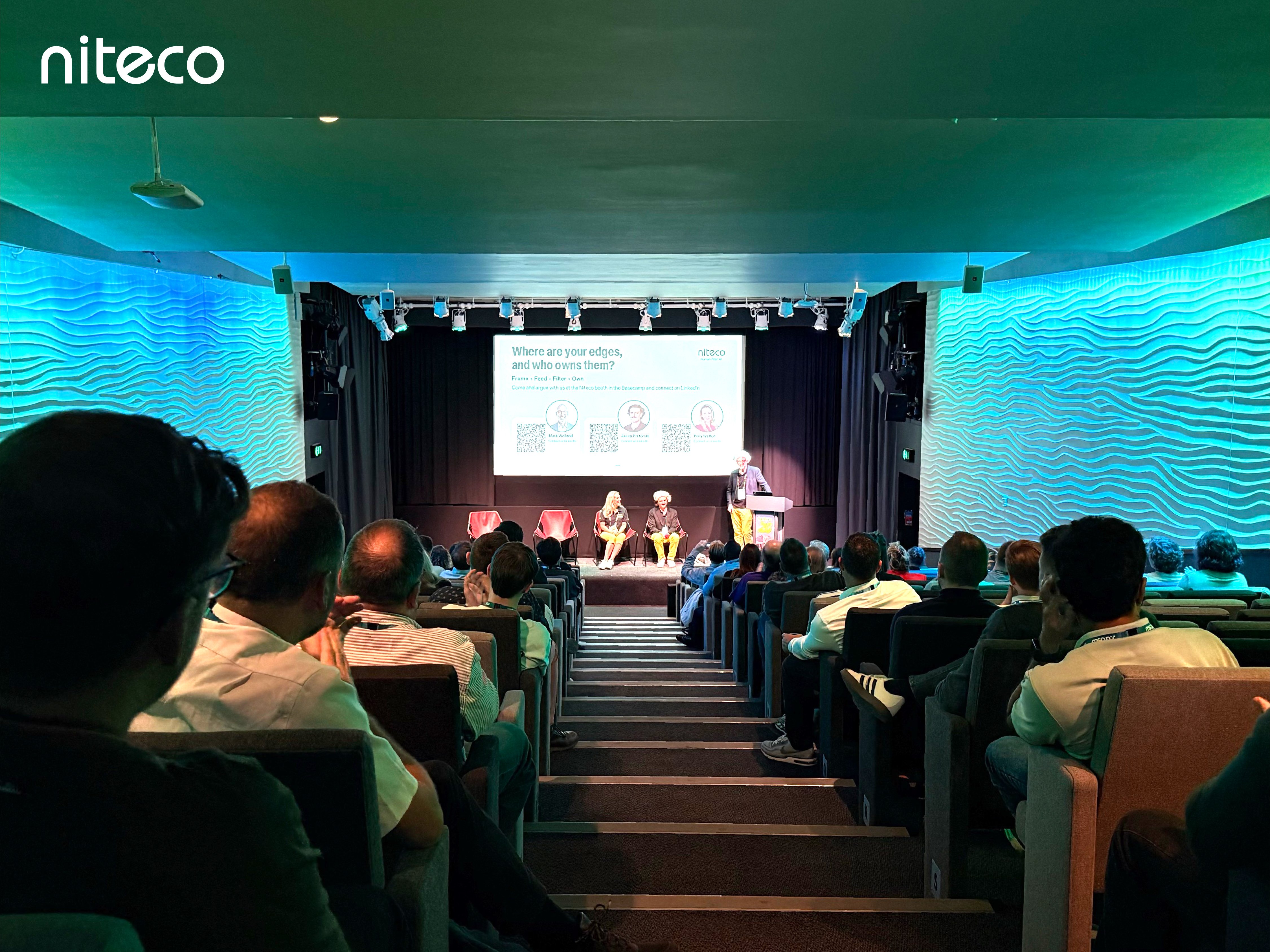
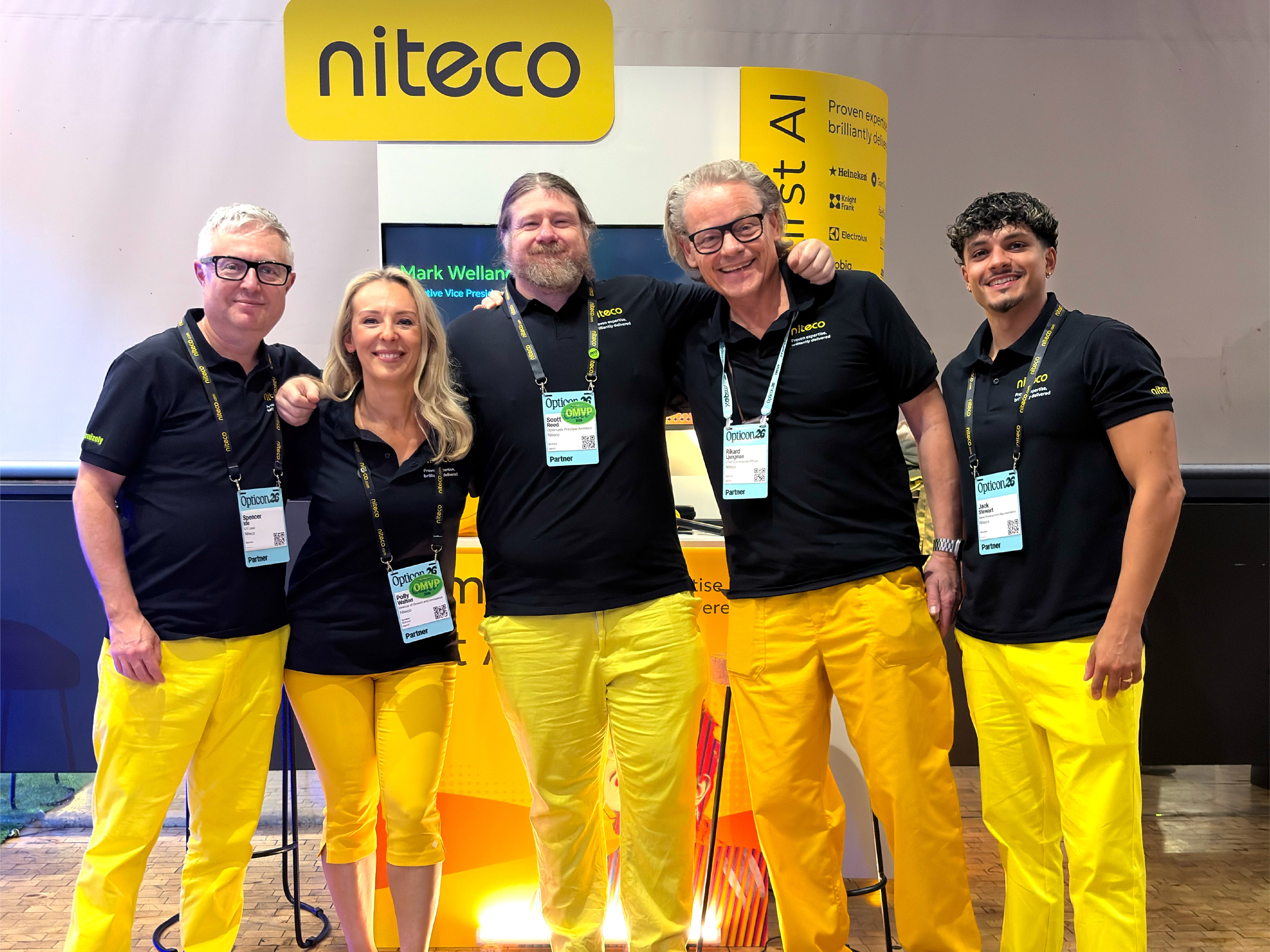
That idea was at the heart of Niteco's Outpost session that afternoon, "The Human Is Obsolete. Long Live the Human.", where Jacob Pretorius, Client Technical Director and Polly Walton, Director of Growth and Innovation, joined me on stage. As AI takes on more of the work, the value of human judgement goes up, not down.
to transform your business and drive results?
