


Performance Now 2026: The web is getting faster - if you let it.


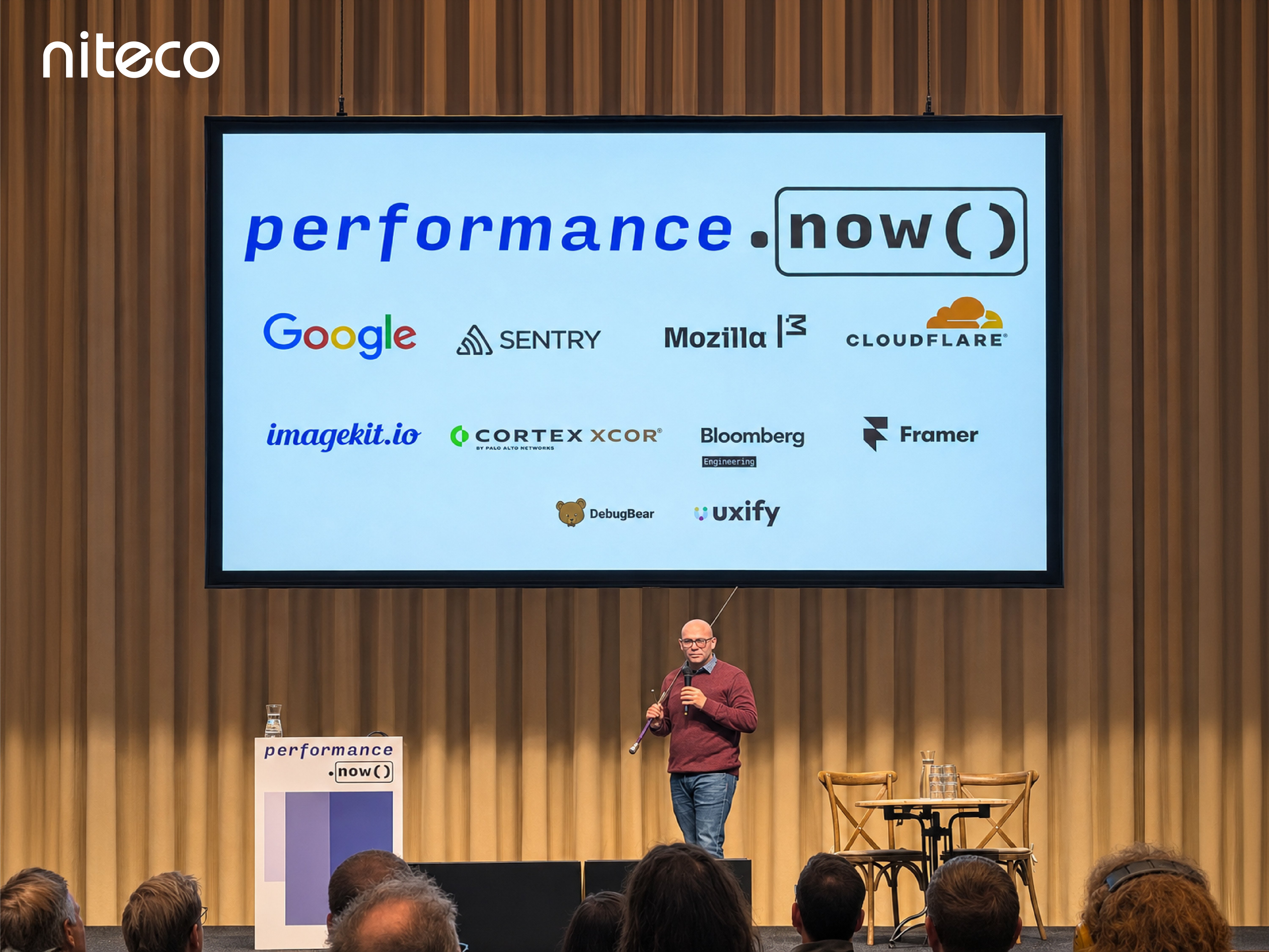
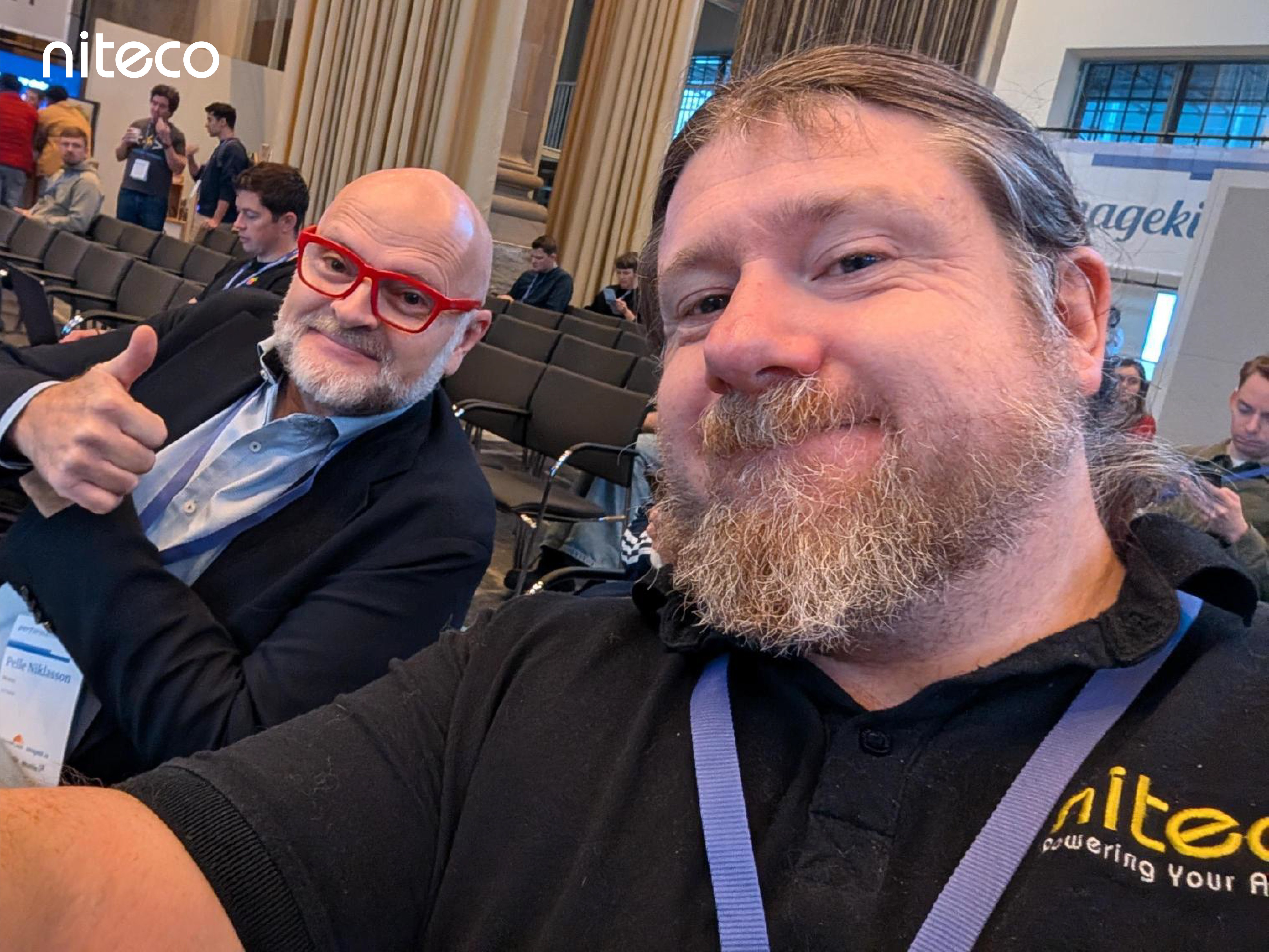
Last week I attended performance.now() 2026 in Amsterdam, the web performance conference that brings together the sharpest minds in the field for two days of talks, data, and honest conversation about what it takes to make the web fast. This year's edition featured 14 sessions across two packed days, and a clear theme emerged: the platform is ready; the question is whether we're using it.
What follows is an overview of every session, with a deeper look at the talks and themes that matter most to teams building on Optimizely and other enterprise platforms today.
The full line-up
Day 1
The first day opened with Tammy Everts (Performance is a Journey), who framed performance not as a project with a finish line but as a continuous organisational discipline, one that requires measurement, culture, and sustained investment. It was a fitting opener, setting the tone for two days of talks that repeatedly came back to the same point: knowing what to measure, and measuring it in the right way.
Scott Jehl (Standards from the Field) followed with a compelling argument for how real-world practice is feeding back into web standards. The browser platform is evolving fast, and many of the things developers reach for frameworks to do are now available natively, if you know where to look.
Martin Michálek (Selling Web Performance) tackled the question every performance engineer eventually faces: how do you get the business to care? Martin's talk was packed with practical approaches for translating Core Web Vitals and load times into language that stakeholders understand, revenue impact, conversion rates, and competitive benchmarking. For anyone working in a consulting or agency environment, this was essential viewing. At Niteco, we've seen first-hand that the most effective performance work starts with a clear business case, and Martin's framework for building one was spot-on.
Risko Ruus (Performance Regression Testing) brought a QA engineer's perspective, sharing methods for catching performance regressions before they reach production. His point resonated: "Once users have seen a better end-to-end experience elsewhere, they expect it from you too." This is where Real User Monitoring (RUM) outperforms synthetic testing, synthetic tests tell you what your lab thinks; RUM tells you what your users actually experience, across the full spread of devices, connections, and geographies.
Pat Meenan (Latest on Web Compression) delivered one of the most technically rich sessions of the conference. Pat took the audience through the state of the art in compression dictionaries, shared and delta compression that dramatically reduces transfer sizes for returning visitors. This is not theoretical; these are capabilities landing in browsers now. Combined with modern caching strategies, including service worker caching layered on top of standard HTTP caching, the savings are significant. For Optimizely sites serving repeated page structures and shared component libraries, compression dictionaries are a natural fit.
Tim Vereecke (Beyond the P75) made a case that resonated deeply. Google's Core Web Vitals threshold is set at the 75th percentile, meaning if 75% of your visits are "good," you pass. Tim argued this is not enough. The P90, the experience of your slowest-but-not-outlier visitors, is where the real story lives. These are users on mid-range Android devices, on 4G connections, in regions further from your CDN edge. They are real customers, and they are the ones most likely to abandon. Tim's real-world data from his own high-traffic project showed that optimising beyond the P75 drives measurable engagement gains. This is a principle we apply in our performance audits at Niteco: the P75 is a floor, not a ceiling.
Harry Roberts (Well, that's weird...) closed the day with a detective-story format, walking through oddities and unexpected findings from real client projects, the kind of data anomalies that only surface when you look closely at your RUM data and ask the right questions.
Day 2
Annie Sullivan (Does AI Build Fast Websites?) opened the second day with what may be the most consequential data point of the conference. Annie analysed more than 100,000 AI-generated websites and the answer to her title question was sobering. The vast majority of AI-generated code, particularly from tools that vibe-code full applications, defaults to React and Next.js. These frameworks ship significant JavaScript bundles, and the performance impact is measurable and consistent.
This matters because browsers are fundamentally optimised for HTML, not JavaScript. A server-rendered HTML page with minimal JS will consistently outperform a client-rendered React application, especially on the devices and connections that real users actually have. And when you look at the P90 rather than the P75, the gap widens dramatically. The user on a three-year-old phone on a congested network does not get the same experience as the developer on a MacBook Pro on fibre.
The data showed a clear correlation between the rise of AI-generated code and a measurable decline in web vitals over the past year. AI tools are reproducing the patterns they were trained on, and those patterns overwhelmingly favour React and Next.js, regardless of whether the use case warrants it. A marketing site, a content page, an e-commerce listing, these do not need a full client-side framework. They need fast HTML, good caching, and progressive enhancement.
Aleth Gueguen (Go fast? Go Web native!) reinforced this with a practical session on harnessing native web APIs for offline capabilities while minimising JavaScript. Tested quite literally on boats and shorelines with intermittent connectivity, Aleth demonstrated that the web platform's native capabilities, service workers, the Cache API, background sync, are mature and performant. The lesson: reach for the platform before reaching for a package.
Max Inden (Save a round trip: optimizing for IETF's Happy Eyeballs v3) delivered a standout session on HTTP/3 and QUIC. Max brought two volunteers on stage to physically pass a "packet" between them, illustrating the difference between TCP's handshake overhead and QUIC's ability to establish connections faster. The key takeaway: QUIC eliminates a full round trip on connection establishment, and with Happy Eyeballs v3, clients can race IPv4 and IPv6 connections simultaneously, falling back gracefully. For users on high-latency connections, mobile networks, distant regions, this is not a marginal improvement; it is transformative.
The practical implication for teams running Optimizely or any modern CMS: ensure your CDN and infrastructure support HTTP/3. The protocol is production-ready, browser support is broad, and the performance benefit is real, particularly at the tail end of your user distribution.
Alex Russell (Performance War Stories) shared hard-won lessons from the front lines, reinforcing that performance work is often about fighting against the defaults, the defaults of frameworks, of tooling, and of organisational inertia.
Cliff Crocker (Core Mobile Vitals: Building the Missing Standard for Apps) revealed the work behind building a Core Web Vitals equivalent for native mobile applications. As a long-time attendee turned first-time speaker, Cliff shared the first metrics flowing from the initiative, a space to watch as mobile performance measurement matures.
Stéphanie Walter (Performance as a Design Opportunity) reframed perceived performance as a design discipline. Rather than treating wait time as a failure to be hidden, Stéphanie argued for designing with performance constraints in mind from the start, skeleton screens, progressive rendering, and meaningful loading states that keep users oriented.
Jeremy Keith (Long-term Performance) closed the conference with a keynote that zoomed out to the longest possible timescale. Connecting telegraph lines, latency, bandwidth, Irish folk music, the World Wide Web, ABC notation, GIF, SVG, and the arc of technology adoption, Jeremy made the case for resilience as the ultimate performance strategy. Technologies that endure are the ones built on open standards, progressive enhancement, and the assumption that the network is unreliable. The web's greatest strength is that a well-built page from 2005 still loads and works. Jeremy's challenge to the audience: build for the long term, not the quarterly sprint.
This resonated with a thread running through the entire conference: the most performant choice is often the simplest one. HTML over JavaScript. Standards over frameworks. Progressive enhancement over client-side rendering. Compression and caching over larger bundles.
The themes that matter
RUM over synthetic, P90 over P75
Multiple speakers - Tim Vereecke, Risko Ruus, Harry Roberts - reinforced that Real User Monitoring is where the truth lives. Synthetic tests run in controlled environments on fast hardware. They are useful for regression detection, but they do not reflect the experience of your actual visitors. RUM data, particularly when analysed at the P90, reveals the users you are failing, and they are often your most valuable: mobile users, users in emerging markets, users on the go.
The browser is optimised for HTML
This was perhaps the most important recurring theme. Browsers have spent decades optimising the rendering of HTML and CSS. The parser is incremental. Rendering is streamed. The critical path is well-understood and fast. When you replace that with a JavaScript framework that takes over rendering, parsing a bundle, executing it, building a virtual DOM, and then rendering, you are working against the platform, not with it.
AI is making this worse
Annie Sullivan's data was stark. AI code generation tools are trained predominantly on React and Next.js codebases. When asked to build a website, they default to these frameworks regardless of need. The result: a measurable increase in JavaScript-heavy sites and a corresponding decline in web vitals across the ecosystem. For teams evaluating AI-assisted development, the takeaway is clear: audit the output, not just the velocity.
HTTP/3, QUIC, and the Network Edge
Max Inden's session made the case that protocol-level optimisation is one of the highest-leverage changes available today. HTTP/3 over QUIC reduces connection establishment time, handles packet loss more gracefully, and delivers meaningful improvements for users on challenging networks. Combined with modern CDN configurations, this is low-hanging fruit for any team serious about performance.
Modern caching: Service workers andbeyond
Several sessions touched on the power of layered caching strategies. Service workers provide a programmable cache that sits between the browser and the network, enabling:
- Offline-first architectures for content that has been visited before
- Stale-while-revalidate patterns that show cached content instantly while fetching updates in the background
- Precaching of critical assets during idle time
- Lazy loading of heavy assets like video - a newer technique that defers video download until the user scrolls to it or interacts, dramatically reducing initial page weight
When layered on top of standard HTTP caching and compression dictionaries, these techniques compound. A returning visitor to a well-optimised site can see near-instant loads with minimal network traffic.
What this means for Optimizely
For teams building on Optimizely CMS and Commerce, the lessons from performance.now() translate directly:
Server-side rendering is your advantage. Optimizely's architecture delivers server-rendered HTML by default. This aligns with the browser's strengths. Resist the temptation to replace this with a fully client-rendered frontend unless there is a clear, measured justification.
Audit your JavaScript budget. Every client-side script - analytics, A/B testing, personalisation, third-party widgets - adds to the bundle. Each one delays interactivity. Use RUM data to understand the real cost of each script on your P90 users.
Leverage compression and caching. Optimizely sites often serve repeated structural patterns across pages. Compression dictionaries, combined with well-configured CDN caching and service worker strategies, can deliver dramatic improvements for returning visitors.
Enable HTTP/3. If your CDN supports it (Cloudflare, Fastly, and Akamai all do), enabling HTTP/3 is often a configuration change with immediate benefit.
Measure at the P90. Google's CWV threshold is the P75. Your performance target should be the P90. This is where you find the users who are deciding whether to stay or leave.
Be cautious with AI-generated frontend code. If your team is using AI tools to generate components or pages, review the output for unnecessary framework dependencies and excessive JavaScript. A static marketing page does not need React.
How Niteco approaches performance
At Niteco, performance is not an afterthought, it is part of how we build. Our approach draws on many of the same principles highlighted at performance.now():
- RUM-first measurement using tools that capture real user experience across the full device and connection spectrum
- Performance budgets set at the P90, not just the P75
- Server-rendered, HTML-first architectures that work with the browser rather than against it
- Layered caching strategies including CDN, HTTP caching, service workers, and compression optimisation
- Continuous regression monitoring to catch performance degradation before it reaches users
- Optimizely-specific performance tuning - from output caching and content delivery to script management and third-party governance
We work with our clients to build the business case for performance investment (exactly as Martin Michálek advocated), measure the impact with real data, and deliver sustained improvements, not one-off audits that gather dust.
Looking ahead
The message from performance.now() 2026 is clear: the web platform is powerful, modern, and fast, when we use it as intended. The tools are there: HTTP/3, compression dictionaries, service workers, native lazy loading, server-side rendering. The challenge is resisting the pull of unnecessary complexity, especially as AI-generated code accelerates the spread of heavy JavaScript frameworks into places they were never needed.
The web has always been at its best when it is simple, resilient, and accessible. Performance.now() reminded us that building for the long term, as Jeremy Keith so eloquently argued, is not just good engineering. It is good business.
Ready to see how your Optimizely site performs for real users? Explore Niteco Performance Insights or talk to our team about a performance audit.