


We put AI on trial at Optimizely’s Opticon London. Here's the verdict


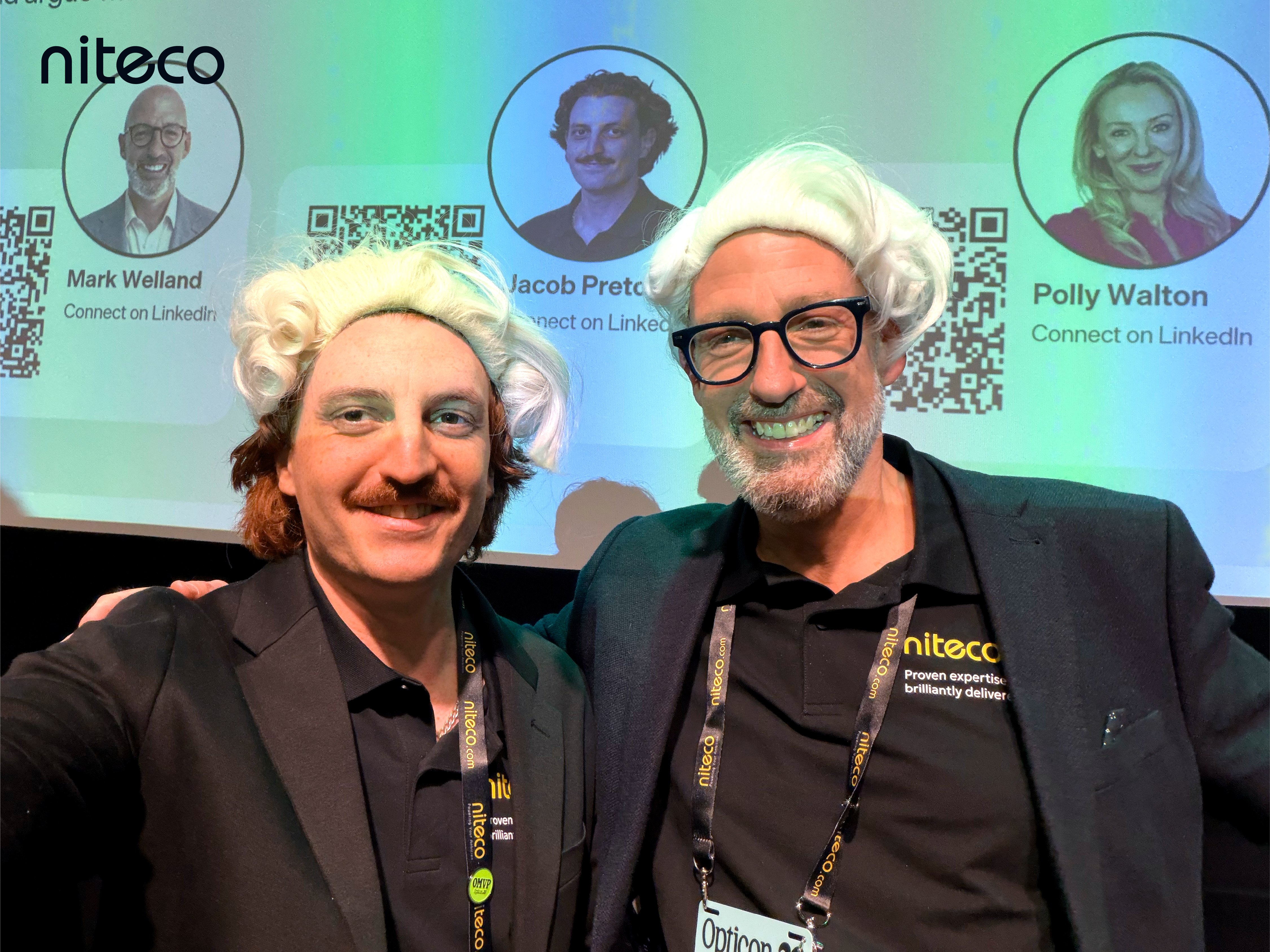
By Mark Welland, Executive Vice President, Europe and North America acting as the prosecution. With Jacob Pretorius, Client Technical Director, and Polly Walton, Director of Growth and Innovation, for the defence.
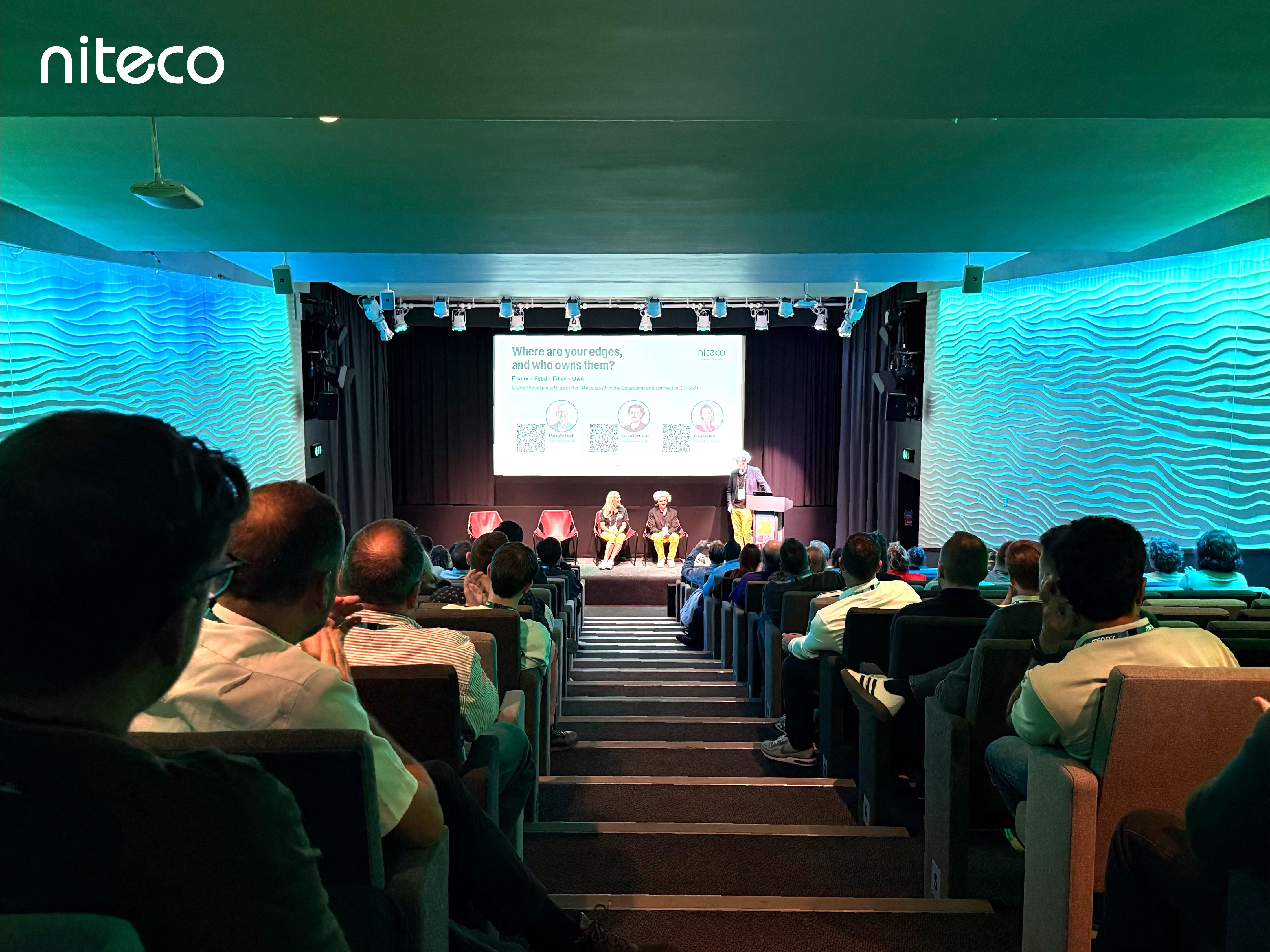
At Opticon London this month, I stood on stage at the Barbican and argued that (in this agentic AI world) the human is obsolete.
We built our session in Optimizely's Outpost track as a trial. I was the prosecution. My colleagues were the defence. The audience was the jury, voting live in the event app on a single motion: within five years, AI will make most digital roles obsolete.
Before hearing any evidence, the room voted 18% for the motion, 54% against and 28% undecided. Here's how the case unfolded and what the jury decided.
The case for the prosecution
I argued to win because the evidence is real.
Salesforce. Marc Benioff said in September 2025 that AI had helped cut Salesforce's support team from about 9,000 people to about 5,000. "I need less heads," he said.
Shopify. In April 2025, CEO Tobi Lütke told staff that before asking for more headcount, teams must show why AI can't do the work. The human used to be the default. Now the human is the exception you have to justify.
Stanford. Researchers at Stanford's Digital Economy Lab found that employment for 22 to 25-year-olds in the most AI-exposed jobs is now 19% below where it should be, up from 15% a year earlier. The gap is widening. It isn't mostly redundancies. It's the junior roles that were never advertised. The graduate positions that were never backfilled.
Coca-Cola. Christmas 2024, and Coca-Cola did an AI remake of their '90s classic "Holidays Are Coming" advert. There was uproar. It drew complaints. So, for Christmas last year, they did it again. Its global head of generative AI, Pratik Thakar, was unrepentant: "The genie's out of the bottle."
Then I asked the room; a massive 91% said AI had made them more productive in the past year, and more than half put the gain above 25%. So, I did the sum every CFO and finance director is already doing. A team of eight that's 25% more productive does the work of ten. If you decide to focus on holding the output consistent, then you need two fewer people in that team of eight. So, who goes?
The case for the defence
The defence didn't pretend AI does nothing. They argued about where the value goes once it does. They explain that AI does the heavy lifting in the middle, but the human value goes to the work around the edges. We call this the human value, and it has four specific stages: frame, feed, filter, and own.
Filter: checking the work. Jacob opened with a trial by METR, an independent lab that tests AI models. Experienced developers and later felt it made them 20% faster. The data actually said they were 19% slower. METR now describes that early-2025 result as historical, and its 2026 survey found developers reporting big speed increases while warning that the self-reports are "not necessarily grounded in reality". The lesson isn't the number. It's the gap between how productive AI feels and what you can prove.
As output gets cheaper, checking becomes the job. Shopify's Tobi Lütke now complains about "slop grenades": unreviewed AI output passed to a colleague to check. We've all experienced it. In February 2026, GitHub let maintainers switch off public pull requests, and OpenAI's own Codex repository now accepts changes from collaborators only.
Feed: the context nobody wrote down. The same Stanford paper finds that the gap hits juniors, not experienced staff. AI has absorbed codified knowledge, the kind written into manuals and style guides. It hasn't absorbed tacit knowledge, the kind you only learn through hands-on experience, by doing the job. The car maker, Ford, learned this the hard way, rehiring and promoting more than 350 experienced engineers after automated quality checks missed what they knew.
Frame: deciding the goal. Polly pointed to Gartner's prediction that by 2028, 80% of the tangible return from agentic AI will come from specialised agents built for specific business processes. The value isn't in the agent. It's in choosing which process to point it at and deciding what success looks like.
Own: answering for the results. Commonwealth Bank replaced 45 call-centre roles with a voice bot. Call volumes went up. The bank reversed the decision and admitted its assessment "did not adequately consider all relevant business considerations". An agent can't apologise. Somebody human has to own it.
The Human Value
Those four points are the framework at the heart of our session. We call it the Human Value:
- Frame: deciding the goal.
- Feed: adding the context the data misses.
- Filter: approving the work before it goes live.
- Own: answering for the results.
The AI does the middle: the heavy lifting, the first draft, the volume. Humans own the edges.
Think of a busy restaurant kitchen. The ovens, mixers, knives and spatulas (machines and tools) do most of the cooking. But it’s the head chef who decides what's on the menu. The chef who knows the regulars knows which supplier is always late and that table six has a nut allergy. The pass checks every plate before it leaves. And when a dish goes wrong, it's the chef's name over the door.
The verdict
At the close, the room voted again, with 67 responses this time.
| Opening vote | Closing vote | |
| For | 18% | 22% |
| Again | 54% | 60% |
| Undecided | 28% | 18% |
The motion was defeated both times. The undecided vote fell by ten points, and both sides gained from it, with the defence gaining more. The prosecution picked up four points, which I'm counting as a moral victory!
However, the most revealing result came mid-session. We asked: if an AI agent ran your next campaign end-to-end and you could keep one step human, which would it be? 62% per cent chose approving the work before it goes live. 18% chose adding the context the data misses, 14% chose deciding the goal, and just 5% chose answering for the results. One brave person chose to let it run end-to-end with no human intervention.
The takeaway - Three questions for your organisation
- Where are your edges? Map one AI-assisted workflow and mark every point where a person changes the outcome.
- Who owns them? Put a name against each gate, especially Own. "The bot did it" is not an answer your customers will accept.
- What are you measuring? Not how fast AI feels, but outcomes from your own data, so you know where human effort earns its value.
The middle of the work is changing fast. The edges are where the value is now.
Niteco is human-first AI. Not humans instead of AI, not AI instead of humans, but humans deciding where the value is, and only that.
If you want to build a plan and create an agent, enable an agentic workflow or a virtual teammate with either Optimizely's Mark AI platform or any other, for that matter, then contact the team here at Niteco. We are the world’s AI experts.
to transform your business and drive results?
