


Unlocking higher ROI: The power of Optimizely A/B testing


TL;DR — Quick summary
Optimizely A/B testing lets you compare page and campaign variants to find what actually converts, replacing guesswork with data.
Key features include AI-driven variation generation, server-side testing, a Stats Engine for reliable results, and advanced targeting via Opal — now an agent orchestration platform.
Best practices: start with high-traffic pages, isolate one variable per test, define a measurable goal upfront, and run tests long enough to reach statistical significance.
Niteco, the world's largest Optimizely partner, has helped clients achieve results including a 385% lift in conversion rate for some markets across a two-year program for Electrolux, with 11x ROI.
“Just winging it” doesn’t cut it in digital marketing anymore. If you’re not testing, you’re guessing. And in a world where every click counts, guesswork gets expensive fast. That’s why leading brands are turning to Optimizely A/B testing to eliminate guesswork and make more informed and data-driven decisions. Powered by Opal — Optimizely's agent orchestration platform — Optimizely A/B testing has moved experimentation beyond simple split tests into intelligent, automated experimentation at scale.
This article explores how Optimizely’s robust testing capabilities help you make confident moves that improve ROI: key features, best practices, and how the right experimentation strategy can lead to long-term marketing success. Dive in to learn more insights from Minh Ta, Niteco’s Digital Experience Lead aka certified Optimizely Experimentation Strategist who helped Niteco achieve 38%-win rates on experimentation.
Understanding the power of A/B testing
A/B testing has become a cornerstone of effective digital marketing - and for good reason. At its core, A/B testing allows you to compare two versions of a webpage, email, or ad to see which one performs better. But beyond surface-level comparisons, it’s a powerful strategy to make data-backed decisions that drive real business impact.
When done right, A/B testing directly supports your goal to improve marketing ROI. Instead of relying on assumptions or outdated strategies, you’re continuously learning what resonates with your audience - whether it’s a headline, a layout, or a call to action. Over time, these small, strategic changes compound, leading to significant performance gains across campaigns.
With Optimizely A/B testing, marketers get more than just basic test results. You gain access to a full experimentation platform built for precision and scalability. That means better targeting, faster insights, and more confident decisions - all of which work together to increase ROI marketing performance.
To understand how to get the most out of your tests, check out our guide to A/B testing and best practices.
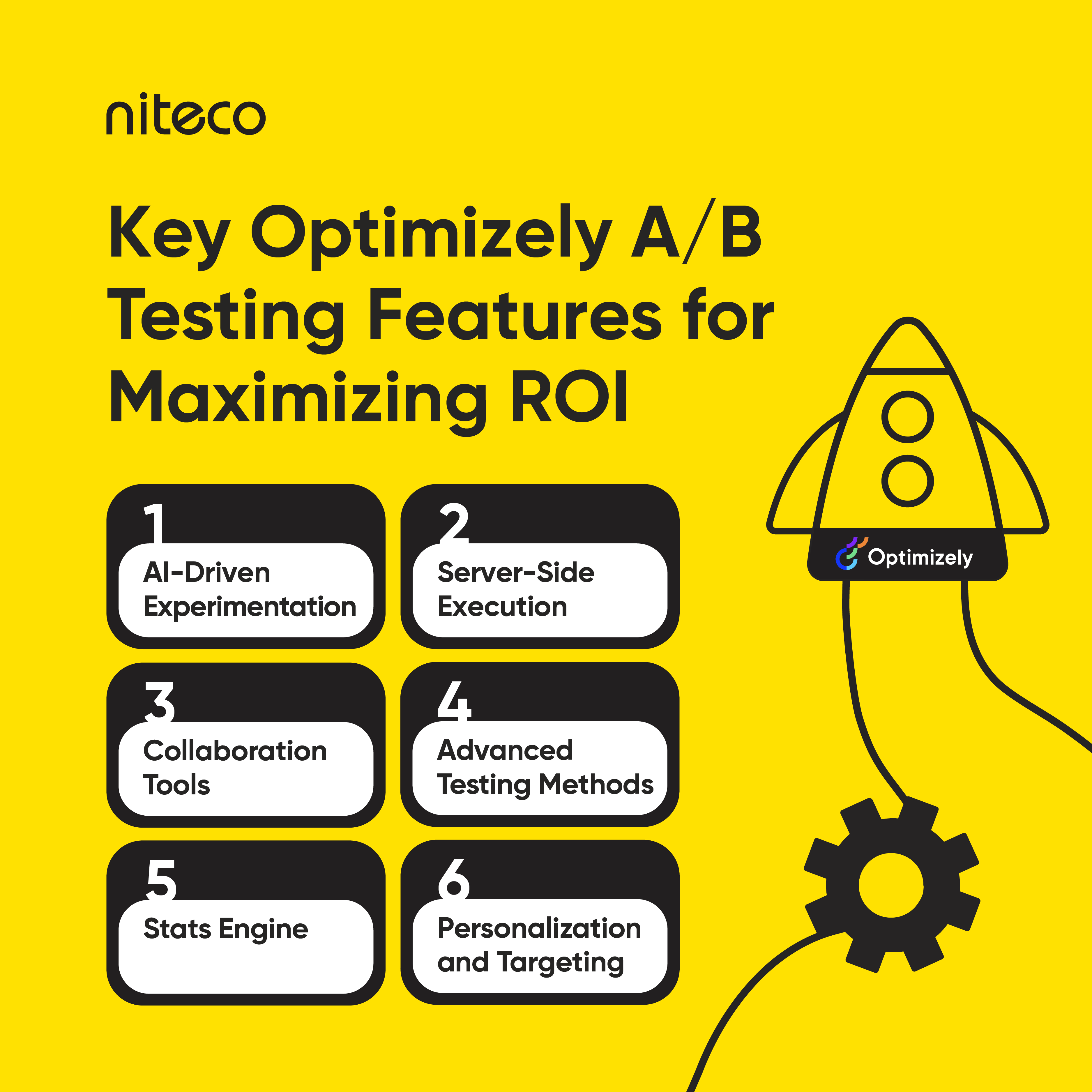
Key Optimizely A/B testing features for maximizing ROI
AI-driven experimentation
This is where Optimizely's platform has evolved most significantly. Opal, which started as an AI assistant, is now a full agent orchestration platform embedded across Optimizely One. It automates tasks, surfaces insights, and guides decisions across content, experimentation, and personalization workflows.
For experimentation specifically, Opal can generate test variations automatically based on best practices and historical data, dynamically shift traffic toward winning variants during a live test, and summarize results in plain language via the AI Variation Summary feature. Teams that previously needed analysts to interpret test outputs can now act on Opal's summaries directly, regardless of technical background.
Since May 7, 2025, Opal features operate on a credit-based billing model across Web Experimentation, Feature Experimentation, CMS, CMP, and other Optimizely products. Organizations receive a complimentary monthly allocation, with additional usage billed separately. If your team plans to use Opal heavily for experimentation, it's worth accounting for AI credit usage when estimating total platform cost.
Building on this foundation, Niteco has extended Optimizely’s AI-driven experimentation capabilities even further. Our Opal Tools Hackathon-winning innovation, the Sample Size Genie, takes Opal AI to the next level by eliminating one of the most time-consuming parts of experimentation: planning.
With direct integration into GA4, Sample Size Genie empowers experimentation strategists to plan experiments in minutes rather than days. It automatically calculates the required sample size, baseline conversion rate, and test duration with just a few simple prompts inside Opal, making the entire planning process faster and more reliable.
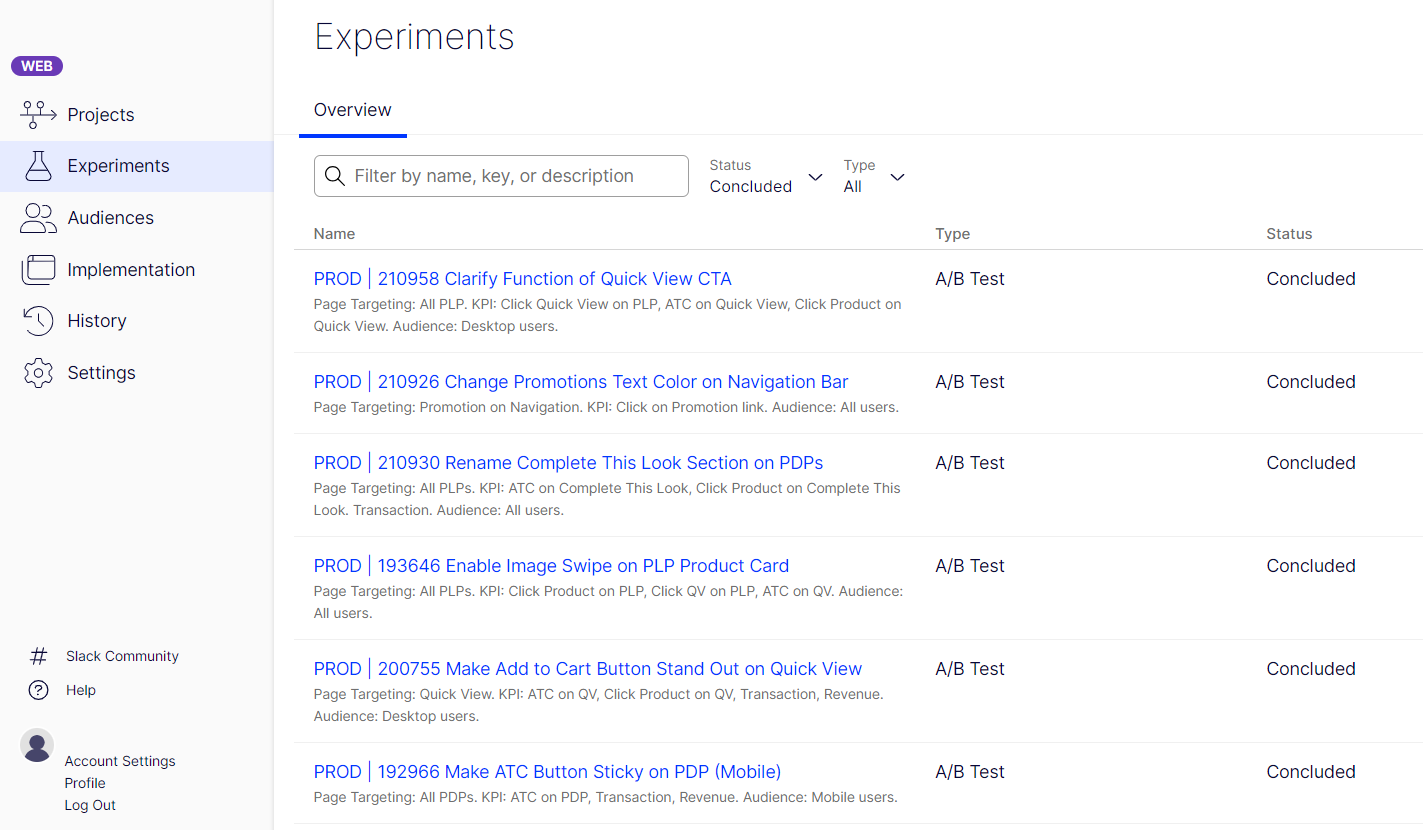
Want to harness the power of AI for your experimentation and digital growth? Explore Niteco's AI services and solutions today!
Server-side execution
For high-traffic websites, maintaining speed during testing is critical. Optimizely’s server-side experimentation eliminates page flicker and reduces latency by running tests directly on the server. This ensures a seamless user experience even as you scale.
For instance, a global Commerce site can roll out and validate new features without compromising performance. Backed by a global CDN and Edge Delivery, the platform guarantees lightning-fast load times and smooth execution - no flicker, no frustration.
Collaboration tools
Did you know that Optimizely provides an all-in-one marketing ecosystem? If yes, you’re going to be surprised with what’s next. Optimizely A/B testing is also a full cycle tool by itself, whether brainstorming, designing, or tracking experiments, you can do it within the tool. No need for third-party support, with features like idea backlogs, customizable workflows, and shareable calendars.
This set of features facilitates seamless collaboration across different teams, such as marketing, product, and development, making it easier to sustain a robust experimentation program.
Advanced testing methods
Another cutting-edge feature from Optimizely experimentation that you definitely find handy is its advanced testing methods. The feature supports a variety of testing methodologies, including A/B testing, multivariate testing, and multi-armed bandits.
These advanced methods give businesses the flexibility to tackle complex optimization challenges, making it suitable for both simple and sophisticated experiments. As a result, businesses can uncover nuanced user behavior and preferences, making more conversion-driven decisions (like IBM saw a 30% increase in conversions).
With Optimizely, we successfully ran experiments for Electrolux, one of the top home appliance suppliers, helping them achieve a 385% increase in conversion rate in 2 years for some markets, 11x ROI. Read on to know more about our approach on the project and CRO.
Stats engine
Experiments are only as good as the data behind them. Optimizely’s Stats Engine ensures your results are statistically sound and trustworthy. By counting conversions based on unique visitors and offering high-confidence intervals, it delivers faster, more accurate insights - so you can act with confidence.
This minimizes false positives or negatives and supports smarter, data-backed decision - crucial when even minor improvements can drive major impact.
Personalization and targeting
Last but not least, “one size fits all” is no longer suitable in this marketing landscape, especially when customers are requesting more understanding from businesses. That’s why you can’t overlook this personalization and targeting feature from Optimizely. This feature enables hyper-personalized experiences through granular audience targeting, real-time segmentation, and integration with customer data platforms (CDPs).
How is it helping your experiments? It aligns experiments with customer data, allowing for precise targeting and tailoring to audience cohorts in real-time. As such, you can facilitate relevant interactions, directly impacting customer satisfaction and loyalty.
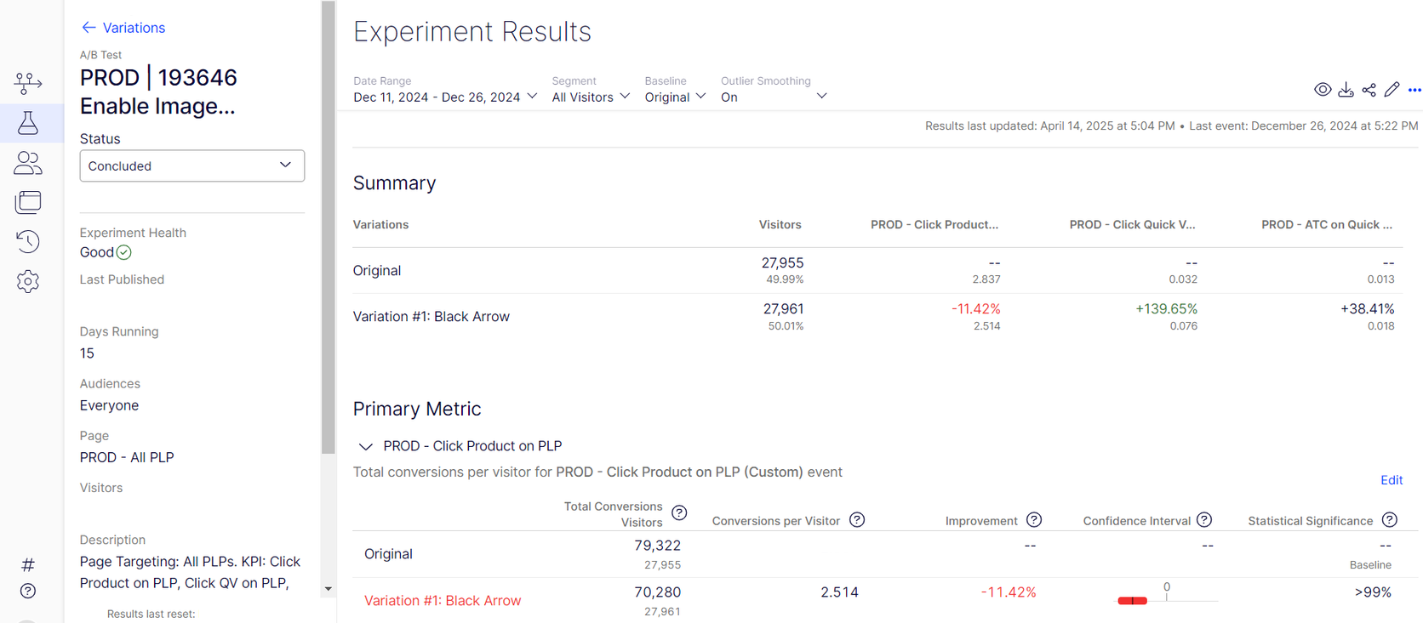
Best practices for running A/B tests in Optimizely
Running A/B tests in Optimizely can significantly enhance your website’s performance when done thoughtfully. From the experience running hundreds of tests in all forms for 30+ websites (client with roughly $50m yearly revenue included), I would like to share the surviving tips for running A/B tests using this platform.
Accurate data first
The process begins with collecting data to identify high-impact areas. Use analytics tools like Google Analytics 4 and heatmaps to spot pages with high drop-off rates, such as a checkout page where 60% of users abandon their carts. This data shows where testing can yield the most value.
Set clear goals by defining specific, measurable metrics
Don't estimate, be specific. For example, aim to increase conversion rates by 15% or reduce cart abandonment by 20%. Make sure to have these metrics set up correctly on Optimizely Experimentation platform. Establishing these targets upfront ensures your test has a focused purpose.
From there, create a hypothesis grounded in user research, behavior analysis, feedback, or competitive benchmarks. A hypothesis like “Reducing form fields from 10 to 5 will increase completion rate by 15% due to lower user friction” provides direction and prioritizes tests by potential impact.
Isolate variables for clear insights
When designing variations, isolate a single variable - such as a headline, button color, or checkout flow - to maintain clarity in cause-and-effect relationships. Ensure proper tracking within Optimizely to capture accurate data and test the technical setup to avoid errors. A small oversight here can ruin an otherwise solid experiment - been there, done that.
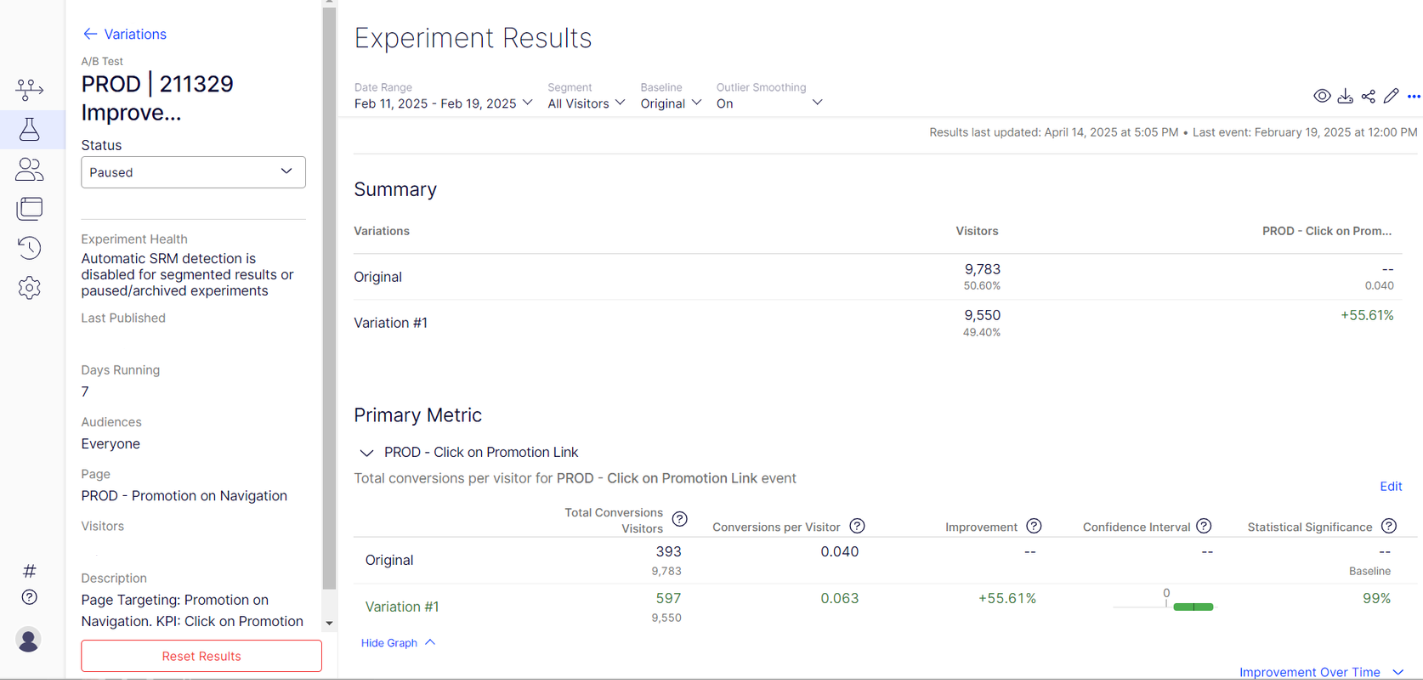
Measure, learn, repeat
It’s our CRO approach, a data-driven loop. Analyzing results involves checking statistical significance across all metrics, not just the primary goal, to uncover unexpected insights. Optimizely’s Stats Engine can help measure significance in dynamic environments, ensuring reliable conclusions.
Document all learnings, as even negative or neutral results guide future strategies. For instance, a test showing a 360-degree product view didn’t boost sales indicates user indifference, saving resources on similar features.
Common mistakes to avoid
Experimentation isn’t always a walk in the park - it’s more like a hike with a few hidden pitfalls. Here are some common mistakes to avoid - ones I’ve stumbled into, so you don’t have to.
| Mistake | Description | How to avoid | Example/Impact |
| Testing too many variables | Changing multiple elements obscures what drove results. | Test one variable per experiment, e.g., button text or layout, not both. | Testing checkout flow and button color together makes it unclear which change increased conversions. |
| Insufficient sample size/short duration | Small samples or early test endings produce skewed data. | Use sample size calculators and run tests for 1-2 weeks based on traffic. | A test stopped after 3 days with 100 users may falsely show a winner. |
| Ignoring customer journey | Testing low-impact pages doesn’t drive conversions. | Focus on high-conversion pages like product or checkout pages. | Testing “About Us” vs. checkout page misses revenue opportunities. |
| No analytics integration | Lack of integration causes troubleshooting issues or broken tests. | Ensure Optimizely connects with analytics tools for accurate tracking. | Missing integration led to untracked user segments, skewing results. |
| Drawing conclusions from ongoing tests | Acting on incomplete data risks false positives. | Wait for test completion; use Stats Engine for dynamic significance. | Mid-test changes based on early data reversed after full results showed no impact. |
Conclusion
Optimizely's powerful A/B testing and experimentation features help businesses improve ROI by making data-driven decisions. With tools like AI-driven insights, server-side execution, and personalized targeting, continuous testing ensures ongoing optimization for better performance and higher conversions.
As the world's largest Optimizely partner, Niteco provides expert consultation and implementation support to help organizations get real results from the platform. Optimizely itself earned the top spot in the 2025 Gartner Magic Quadrant for Digital Experience Platforms, ranked highest on both Ability to Execute and Completeness of Vision — the sixth consecutive year it has been named a Leader in that report. That track record matters when you're evaluating a long-term experimentation platform.
Our award-winning Sample Size Genie, built on Optimizely Opal, is a practical example of how Niteco innovates within the platform to make experimentation faster and more statistically sound for clients.
If your organization is running an older version of Optimizely and hasn't yet explored what the current platform can do for experimentation, it may be worth reviewing your Optimizely upgrade options with a team that knows the platform inside out.
Whether you’re just starting or looking to elevate your current optimization strategy, our team can guide you through every step to ensure success.
Ready to take your marketing efforts to the next level? Contact Niteco today to schedule a consultation, and let’s explore how we can help you achieve exceptional ROI with Optimizely.
FAQs
A/B testing is crucial because it eliminates guesswork in marketing decisions. By scientifically comparing different versions of web pages, emails, or ads, businesses can identify what truly resonates with their audience, leading to improved conversion rates, reduced customer acquisition costs, and higher revenue. It ensures that every marketing change is backed by data, not just assumptions.
Optimizely ensures reliable results through its robust Stats Engine. This engine employs advanced statistical methods to accurately calculate confidence intervals and minimize the risk of false positives or negatives. It counts conversions based on unique visitors and provides trustworthy data, allowing marketers to make confident, data-backed decisions that drive real impact.
Opal has evolved from an AI assistant into a full agent orchestration platform embedded across Optimizely One. In the context of experimentation, Opal can generate test variations automatically, dynamically allocate traffic toward winning experiences, and produce AI Variation Summaries that explain in plain language why a variant outperformed another. As of May 2025, Opal features run on a credit-based billing model, so usage should be planned accordingly. The practical effect is faster test setup, cleaner post-test analysis, and less dependence on specialist resources to interpret results.
There's no fixed answer, but the two most common reasons teams end tests too early are impatience and a lucky early spike in one variant. In practice, most tests need at least one to two full business cycles to account for day-of-week and time-of-day variation in user behavior. A test with high traffic may reach significance in a week; lower-traffic pages may need three to four weeks. Optimizely's Stats Engine shows significance developing in real time, but the advice is to wait for the confidence interval to stabilize before acting, not just for the number to cross a threshold.
A/B testing compares two variants of a single element against a control. Multivariate testing (MVT) tests combinations of multiple element changes simultaneously — useful for understanding interaction effects, but requiring significantly more traffic to reach significance. Multi-armed bandits take a different approach: instead of splitting traffic evenly, the algorithm shifts traffic toward the better-performing variant in real time, trading experimental rigor for faster optimization. Optimizely supports all three. Which to use depends on your traffic volume, how quickly you need a decision, and whether you want to understand why something worked or just what worked.
Niteco is the world's largest Optimizely partner, with over 155 certified Optimizely developers and a dedicated experimentation practice. Beyond implementation, Niteco's team runs and manages A/B testing programs for clients across ecommerce, retail, and B2B, with a track record that includes 38% win rates on experimentation and multi-year CRO engagements for major brands. Niteco also develops its own tooling on top of Optimizely — the Sample Size Genie, which won the Optimizely Opal Tools Hackathon, is one example. Organizations looking to upgrade their Optimizely instance or accelerate their experimentation program can explore Optimizely upgrade options with Niteco here.
to transform your business and drive results?
