


“We were genuinely surprised.”
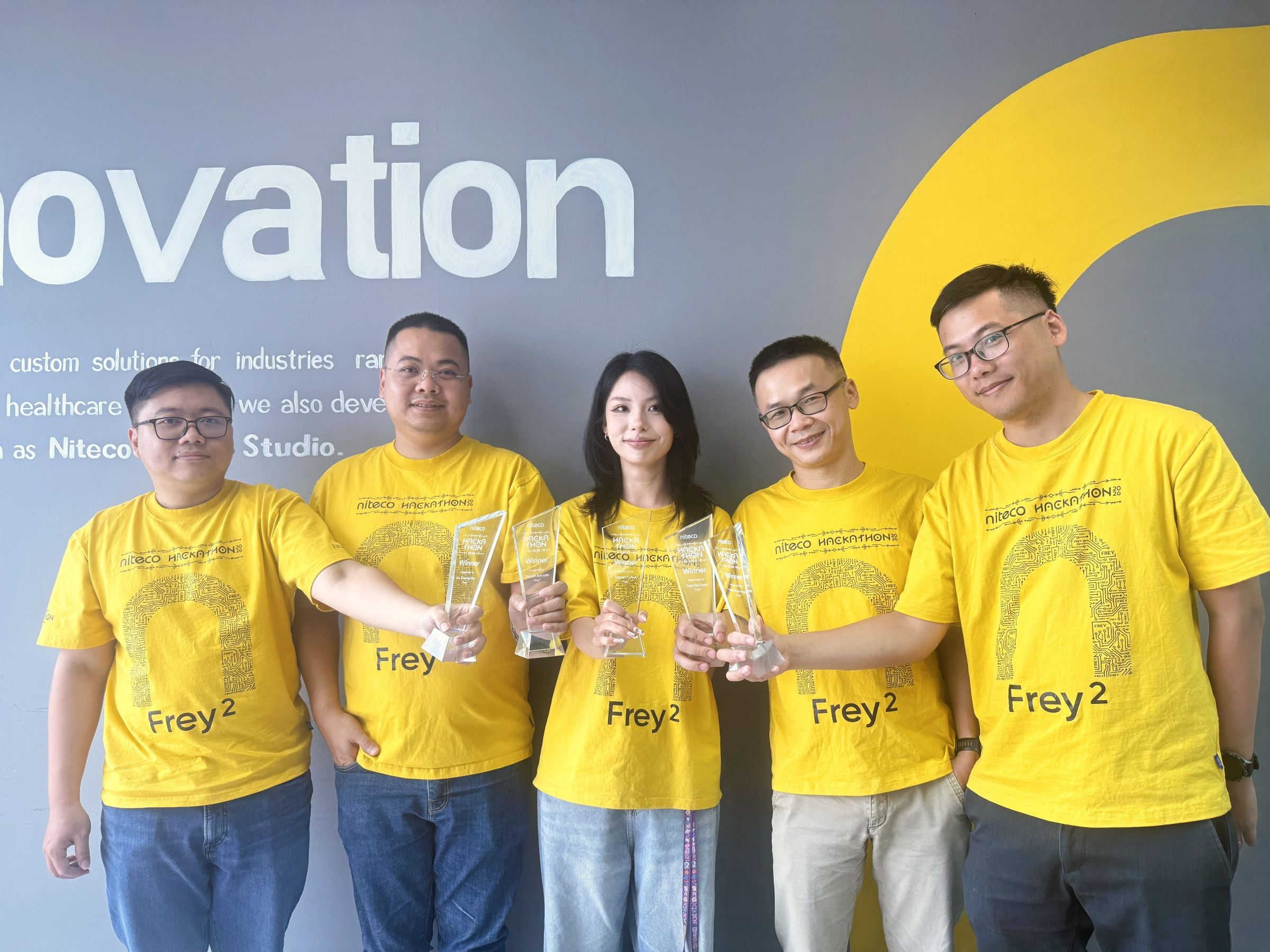
That was Frey2’s response when reflecting on the moment they were announced as the Winner of Niteco AI Hackathon 2026. When their name was finally called, the feeling was more than happiness, it was relief and pride in seeing their hard work had truly made its mark.
So what made the difference? Let’s meet the team and hear more about their journey at Niteco AI Hackathon 2026, from how the idea was formed and roles were divided, to how they handled pressure and the key lessons they took away from the competition.
If you had to describe the past 48 hours in three words, what would they be?
Đau đầu (head-spinning), cháy (passionate), and đã (fulfilling).
“Đau đầu” reflected the early stage, when our team spent hours discussing and refining ideas to arrive at a solution that was both practical and impactful.
“Cháy” described our energy once the direction was set. Everyone stayed highly focused and worked at full capacity to deliver a complete product before the deadline.
And in the end, it was absolutely “đã”, seeing everything function just as the team had envisioned after two days of relentless effort.
Where did the idea come from?
The idea emerged from observing a gap in everyday workflows. The browser is the central workspace for most Product team members. Yet powerful AI agents like Cursor are mostly limited to IDEs, serving Developers. Recognizing this disconnect, the team began exploring how AI could be made more accessible to non-technical roles.
This thinking eventually led to the idea of developing a Chrome extension that integrates the Cursor agent directly into the website experience.
What made the team believe this solution was worth building?
Today, developers’ workloads have been significantly reduced thanks to AI coding tools like Cursor. However, this shift has revealed a new bottleneck. The constraint is no longer purely in coding, but in cross-functional collaboration. Product roles like Quality Assurance (QA), Project Manager (PM), Designer and Business Analyst (BA) still depend heavily on Developers for technical clarification or execution, which may affect delivery speed.
“Cursor Everywhere” is integrated into the browser as an extension, transforming it into a collaborative workspace for the entire Product team - enabling members to interact directly with the technical system without relying entirely on Developers.
The most exciting part? Users don’t need to know how to code. By using natural language, they can analyze, modify, and address coding-related issues. The result is a more streamlined workflow, with fewer bottlenecks and smoother collaboration across roles.
How is the current version different from the original concept?
The first version of the product was quite developer-centric, focusing mainly on helping Frontend Developers debug faster and more efficiently. But as we continued developing and testing the solution, we realized that the real value of the solution extended beyond Developers. Non-engineering roles could benefit significantly from it. That insight led to a strategic shift: transforming the product from a developer-focused debugging tool into “Cursor Everywhere”, a solution empowering the entire Product team.
What role does AI play in your product?
In our solution, AI is more than just a chatbot answering questions - it is directly involved in the entire workflow. It is capable of:
- Understanding the context of a live webpage
- Analyzing technical issues
- Querying the codebase
- Suggesting appropriate solutions
- Editing the UI directly within the browser
- Generating Playwright tests
- Automatically creating pull requests
What was the biggest challenge in applying AI to the product?
Designing the product for non-technical users meant the AI had to handle nearly the entire technical workload. To make this possible, the team invested a lot in a context pipeline that consolidates information from the DOM, console logs, network requests, selected elements, screenshots, and repository context. The challenge was not only collecting enough data, but also processing it in real time without affecting DevTools or browser performance. This became the most engineering-intensive part of the product.
What is the biggest difference between this product and a traditional “non-AI” solution?
With traditional products, users must clearly define both the input and the expected output to complete a task.
With Cursor Everywhere, users simply describe their intent in natural language. A QA can report an issue. A PM can raise a question. A Designer can request a UI change. Cursor Everywhere then understands the technical context behind the scenes and executes or supports the workflow accordingly.
How was the work divided over the 48-hour period?
We embraced an ownership-driven approach, where each member took initiative in areas aligned with their strengths rather than staying within fixed day-to-day roles.
Quan led the development of the browser extension framework and worked with Manh on the AI backend to ensure accurate understanding and seamless processing. Mạnh and Huy developed the live editing feature along with the workflow for managing updates. Meanwhile, Linh and Tú Anh focused on preparing the demo and crafting a compelling narrative for the final presentation.
How did the team handle disagreements or conflicts during the process?
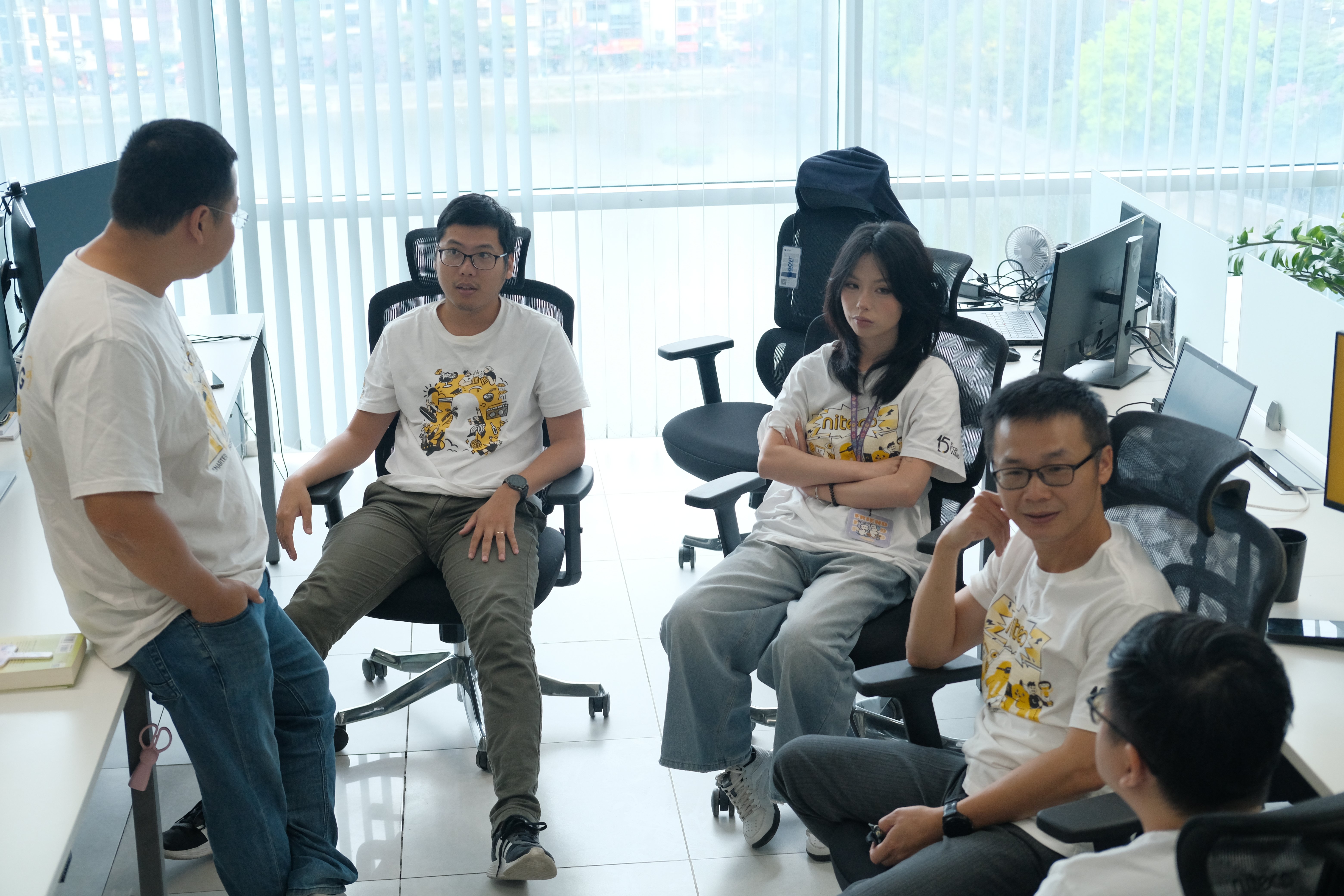
When you have a group of experienced Developers who all care deeply about building something great, debates are inevitable. Everyone wanted the product to be exceptional, and that passion sometimes raised the energy level in the room. To resolve disagreements, we always returned to one core question: “Does this feature make the agent stronger and deliver clearer user value?”
Are there any features the team would like to further improve?
Absolutely! There’s still plenty of room to grow.
First, we aim to enhance the AI’s deeper understanding of the codebase and repository. We also see strong potential in developing a full browser session replay feature to better support debugging and workflow analysis. Another important direction is building AI memory across workflows, allowing Cursor Everywhere to retain context and working history over time. For production readiness, improvements in the security model and enterprise-level integration are also high on our roadmap.
What would you like people to remember most about your product?
When AI is everywhere and accessible to everyone, the way we work moves to an entirely new level. However, real impact doesn’t happen if only Developers leverage AI. The entire Product team, from QA, PM, Designer, and BA to Support, needs the ability to access and collaborate with AI within their daily workflows.