


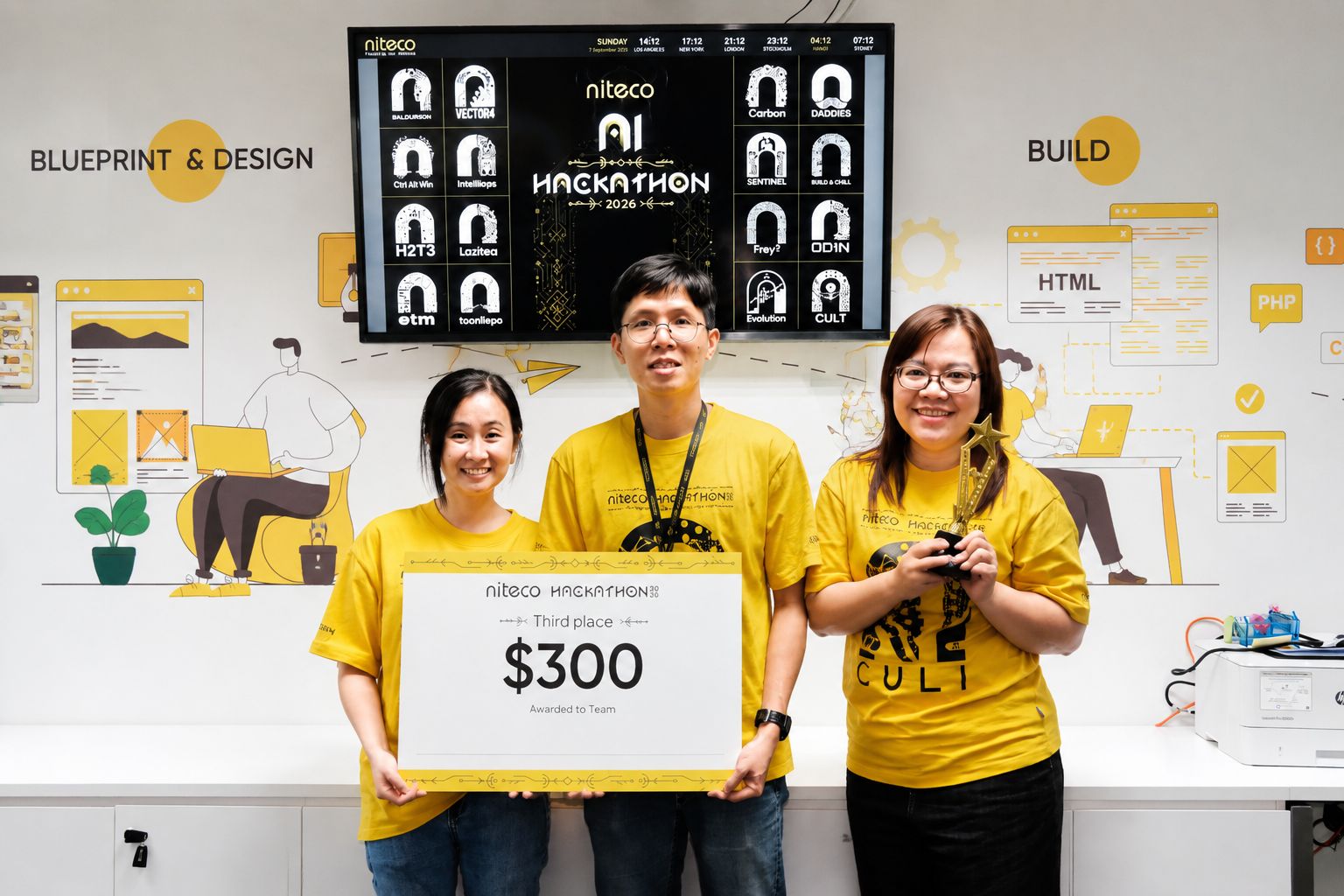
Securing a place in the Top 3 at the Niteco AI Hackathon 2026, Team CULI introduced a solution guided by a simple and memorable philosophy.
The name “CULI” symbolizes the idea of someone who takes on the heavy work behind the scenes, enabling people to focus on leading and making decisions. With the spirit of “CULI lifts. You lead.”, their idea made a strong impression among many innovative projects at the event.
Read on to learn more about team CULI’s product mindset and their inspiring journey throughout this year’s Hackathon.
What made your team confident that your solution could stand out to the judges?
CULI tackles a challenge that almost every Project Manager (PM) and Tech Lead (TL) at Niteco has faced. Clients come in with a vague idea: no detailed specification, no wireframes. Yet the team is expected to provide an estimate before having enough clarity. This is not a theoretical problem, it is part of everyday work.
CULI streamlines this entire process into a single workflow: from initial input to structured output, while helping stakeholders stay aligned throughout. This strong practical relevance allowed the judges to immediately see its impact without needing further explanation.
Was there a personal experience that directly inspired this idea?
Yes, and it’s a very common situation in many projects.
Clients often approach the team with a rough idea and immediately ask “How long will this take, and how much will it cost?” However, at that stage, there are no detailed requirements or thorough analysis to base an estimate on.
Project Managers then need to invest considerable time coordinating with clients and technical teams to clarify scope. The more detailed and structured the estimate is, the higher the chance of approval, but it also requires more effort. And in reality, not every effort leads to a signed contract, which means that all the work can end up being wasted.
CULI was built to ease that exact moment of tension, turning a raw idea into a structured and persuasive estimate in minutes rather than days.
Does AI create a clear competitive advantage for the product? If so, how?
The advantage is visible in three key areas:
- Req. Analyser (Opus) conducts two structured interview rounds with PMs and TLs, referencing knowledge from past Niteco projects instead of following a static checklist.
- Estimator (Opus) generates effort estimates for each task with clear technical reasoning, making the estimation process less subjective.
- Risk Auditor reviews the entire workload to identify potential risks and missing assumptions. This step usually depends heavily on senior technical expertise and is often overlooked when under time pressure.
Did any feature turn out to be more difficult than expected?
The Analyser was that feature. It ended up consuming more time than all other features combined.
At first, we thought that a few clarification questions would be sufficient before moving to the next step. However, building a truly effective two-round clarification process proved to be a real challenge. The system had to be intelligent enough to ask the right questions, not too many, not too few, while ensuring no critical details were missed. It also had to work well for both new projects and ongoing system maintenance.
How would you describe the role of AI in your product to a non-technical audience?
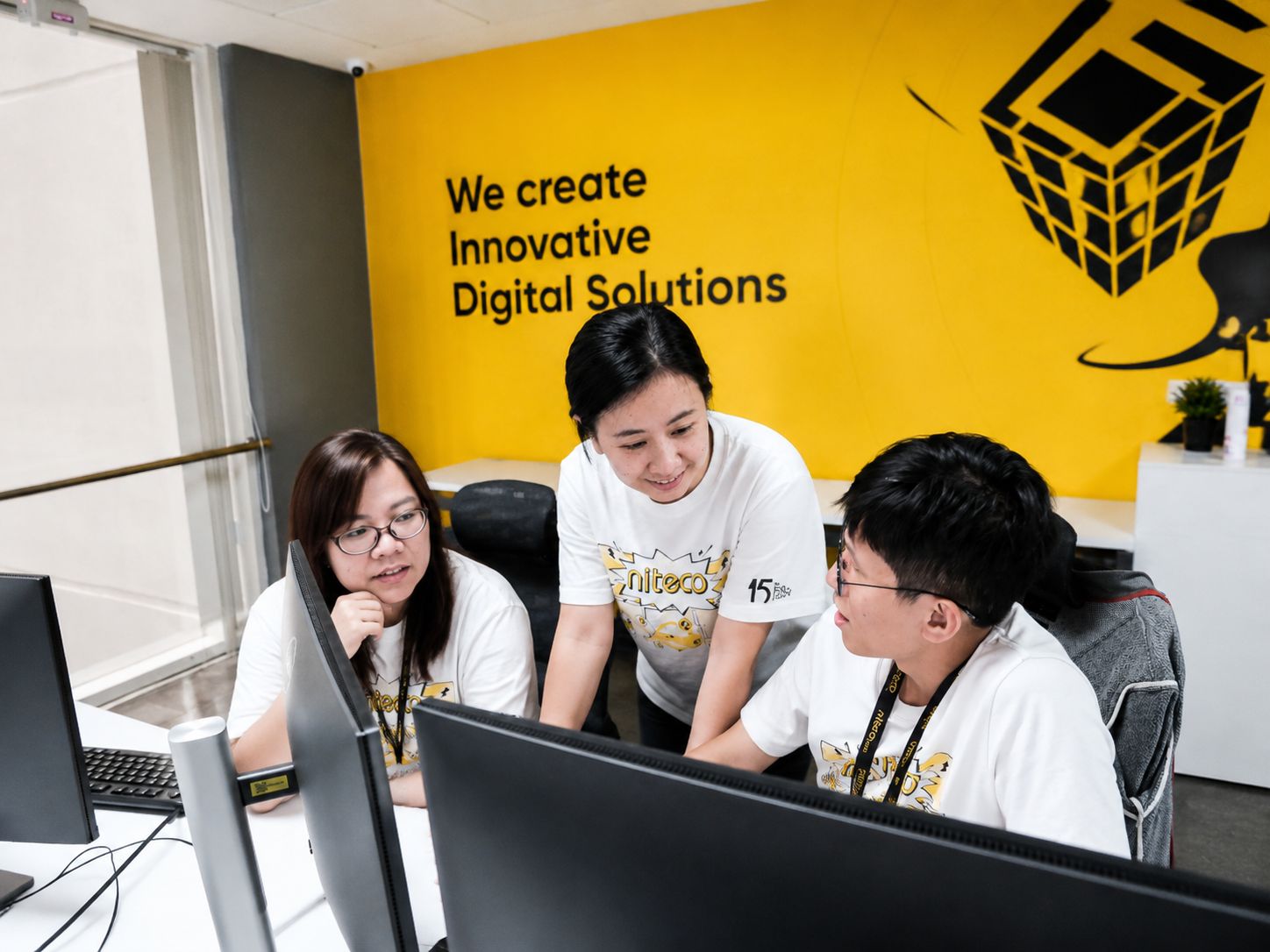
Imagine having a team of experts sitting next to your Project Manager and Tech Lead. Each person has a specific role: clarifying requirements, breaking down tasks, estimating timelines, checking whether the numbers make sense, and identifying potential risks. In CULI, AI is built to take on the role of that entire team. The whole process is automated and completed in just a few minutes, replacing multiple long meetings with a fast, structured workflow.
As a team presenting online from Ho Chi Minh City office, did you face any challenges?
The biggest challenge was not being able to observe the judges’ reactions in real time to adjust our pace like teams presenting in person. To overcome this, we rehearsed more thoroughly and built a tightly structured demo flow. Our goal was to ensure that viewers could still follow the story clearly and fully understand the value our product aimed to deliver.
Did you have a guiding principle for teamwork?
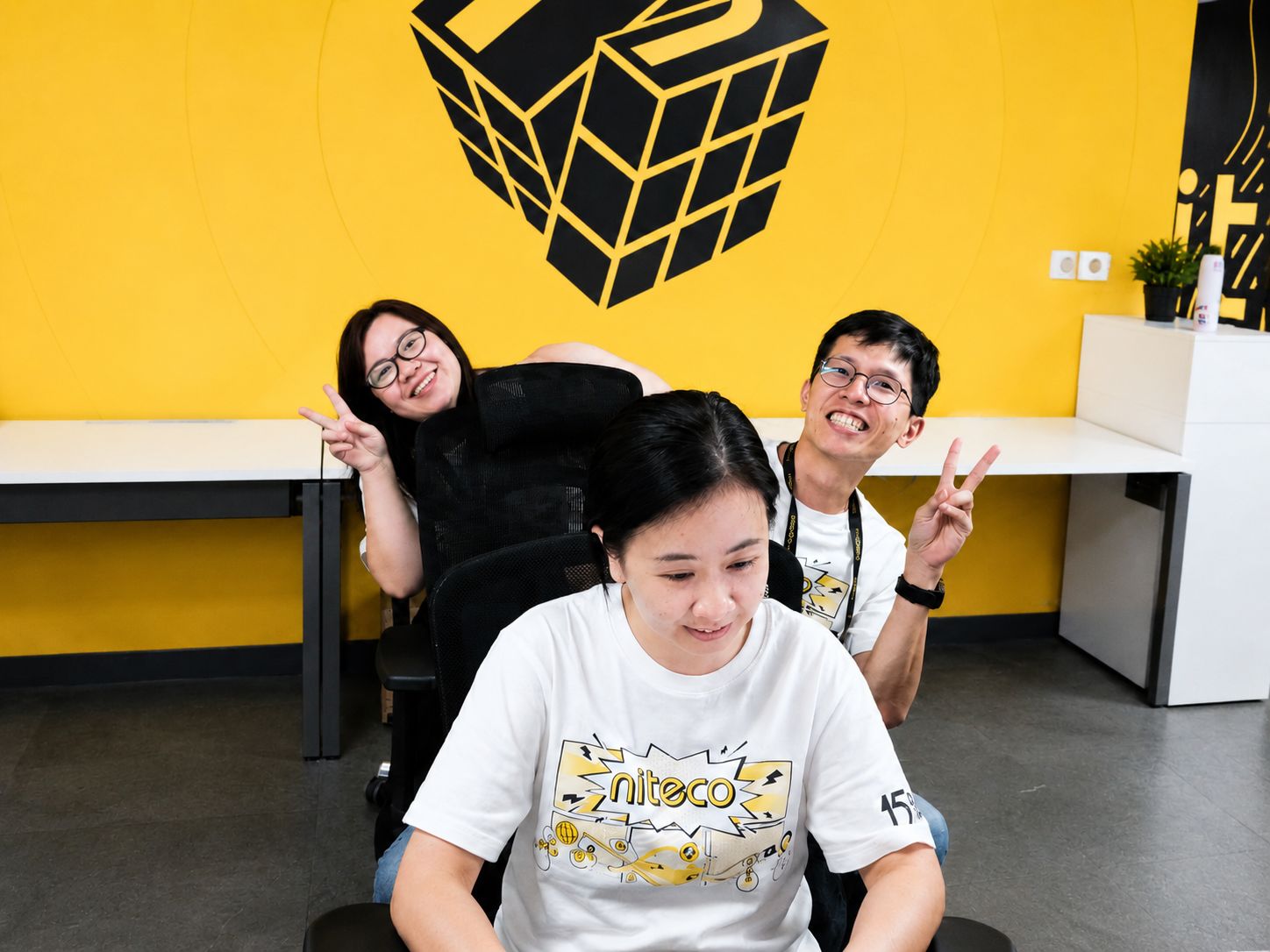
Our team followed one simple principle: “Ship small, align fast.” Each member was empowered to take ownership of their own tasks. However, whenever alignment was needed, we discussed it immediately and agreed on the direction without letting issues linger. In a fast-paced Hackathon environment, this working style helped us maintain speed, reduce misalignment, and stay focused on our original goal.
What’s the story behind the name “CULI”?
“CULI” is a Vietnamese slang term commonly used to describe someone who does the heavy, often behind-the-scenes work. We chose this name to express the role our product plays: taking care of the intensive groundwork, so others can focus on more important decisions. That idea also reflects the core philosophy of our product: “CULI lifts. You lead.”
If you were to implement the product at Niteco within the next three months, what would be your top priority?
The key focus would be embedding Niteco’s historical project data into CULI’s agent memory. This would ensure that estimations are not based solely on general reasoning, but also grounded in actual delivery history: how long similar projects took, what risks occurred, and how estimates compared to reality. This would be a critical step to transform CULI from a strong concept into a dependable working tool.